The traditional Japanese clothing known as kimono, also has another name, gofuku (literally translated as, "clothes of Wu." It was somewhere during the Edo period (1603–1867 AD), that the style of kimono we have come to commonly know, came into full fashion. Though their beginnings can be traced back as early as the 8th century, as Chinese fashions came into style among the Japanese.
Today I had a grand plan, which was part of a Master Plan, that in truth seems a bit lofty at the moment. Today was the day I was going to unpack the rest of my sewing stuff, fabric and boxes of whosits and whatnots, etc. I set right in with a great deal of enthusiasm and fortitude, I did. You know how it is though, don't you? As you unpack you find treasures and treasures are far more interesting than folding and sorting and figuring out where the heck it's all suppose to go.
I did indeed find treasure.
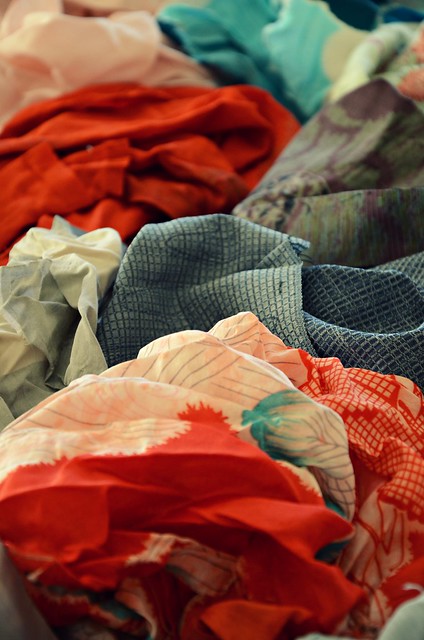

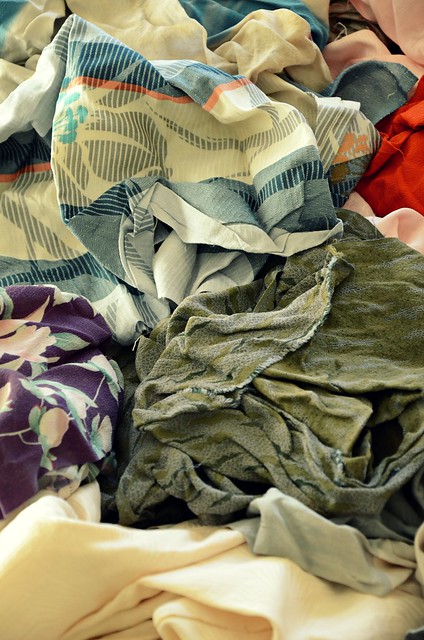
I found my rags of Wu.
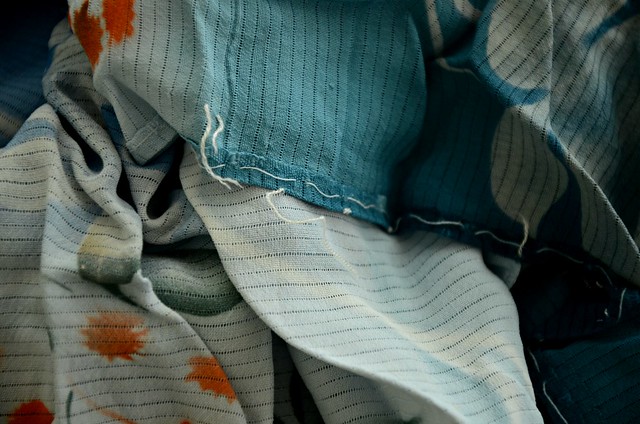
Several years ago my mother sent me a bag full of scraps from vintage kimono. I believe she found them at an estate sale. These are all from what seem to have been well worn garments, dating from maybe the 40s - 60s. Some silk, rayon, linen... Many have stains and holes. I find each piece fascinating. Each one has the remnants of hand stitching, every one of the kimonos they came from had been hand pieced. I love looking at the fine stitching, imagining other makers from the past in other lands.
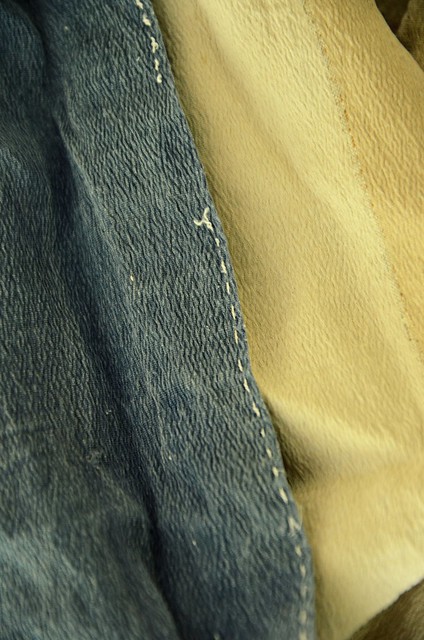

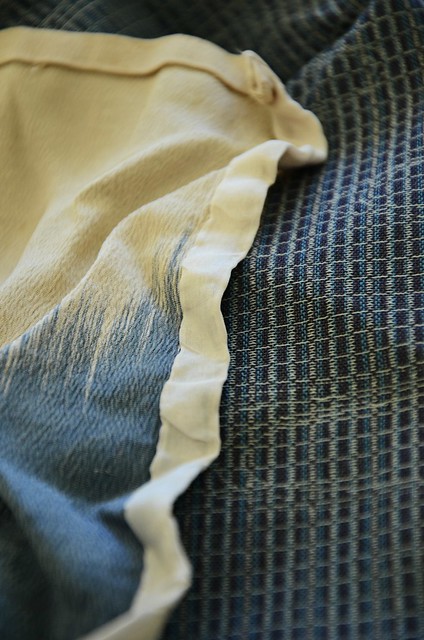
I begin wondering about the lives of those who made and wore these garments. I may make up little stories about them in my head.
Once I start imagining, I get ideas, and that's when the trouble starts.
I did manage to get most of the boxes unpacked before I ran off again to look at my rags and read up on Japanese clothing history.
Well, back to the Master Plan... oh maybe I'll start again on Monday.